World 01
Traditional search
Google · Bing · TripAdvisor · Maps
- How it works:
- Index & retrieval, OTA-dominated
- Query type:
- “Hotels in [destination]”
- Booking path:
- Mostly OTA-mediated
- Levers:
- Hotel SEO, GBP, reviews

Hospitality practice · Manila
When ChatGPT recommends your property, the booking comes direct.
For two decades, OTAs have owned hotel discovery. Booking, Agoda, and Expedia win the Google search; you pay 15–25% commission per stay. AI search just changed the rules. When a traveller asks ChatGPT, Gemini, or Perplexity for a hotel recommendation, the answer can be your property — by name, with a direct link. Every booking that lands direct instead of through an OTA recovers commission you currently lose. The window is open now, while AI engines are still learning which hotels to recommend.
The question most hotels can’t answer
OTAs know exactly where you appear in their funnel. You see the bookings, the commissions, the rate-parity penalties. What you don’t see is the AI search funnel that’s already running in parallel — and where every traveller who asks an AI engine for a hotel recommendation is being routed somewhere. The first deliverable in any LOKAL hotel engagement is the answer to that question:
The OTA margin opportunity
For two decades, OTAs have priced hotel discovery. Travellers Google, OTAs win the click, hotels pay commission. AI search reshuffles that — and the math compounds quickly.
Step 1 — The cost
15-25%
Standard OTA commission rate per booking on Booking.com, Agoda, and Expedia. Every OTA-driven booking loses this margin to the platform — for the entire stay, every stay.
Step 2 — The shift
→ direct
When AI engines name your property in a recommendation answer, the traveller can book direct from your website. The OTA is bypassed. The commission stays with the property. The relationship is yours from the start.
Step 3 — The compounding
Years
AI engines reinforce existing citation patterns. Hotels cited consistently this year compound visibility for years. Hotels invisible to AI today get harder to surface as the category fills with first movers.
The actual revenue impact depends on current OTA mix, average daily rate, and category competitiveness. We model the specific opportunity for each property in the visibility audit — including the share of bookings AI is realistically able to recover at year one, year two, and year three.
Three search worlds for hotel discovery
Hotel discovery doesn’t happen on one surface anymore. Travellers research across three search worlds — and OTAs only dominate one of them. The other two are where direct-booking growth lives.
World 01
Google · Bing · TripAdvisor · Maps
World 02
Google AIO · Gemini in Search
World 03
ChatGPT · Gemini · Perplexity · Claude
The silent killers of enterprise AI visibility
There is no longer one search to optimise for. There are three, and they don’t play by the same rules. Each surfaces different content, rewards different signals, and measures different outcomes. Optimising for one no longer wins all three.
Most hotel websites ship critical room, rate, and amenity data through JavaScript — booking widgets, dynamic rate tables, room-type tabs. AI bots don’t render JavaScript. To them, your booking page is half-empty. Server-side rendering audits typically uncover hundreds of words of missing content per property page.
ChatGPT browsing is powered by Bing’s index. Most hotel SEO programmes only audit Google. Your robots.txt may block Bingbot. Your sitemap may never be submitted to Bing Webmaster Tools. The result: ChatGPT cannot cite the property in live search responses, even when the brand is otherwise strong.
Hotel schema (Hotel, LodgingBusiness, Room, Offer) is what tells AI engines what your property actually is — location, room types, amenities, ratings, awards. Most hotel sites have basic Organization markup and call it done. The expert practice uses schema as architecture so AI engines can disambiguate your property from competitors and cite it accurately.
What the work looks like
Diagnostic
GEO
AEO
Technical
Defense
Portfolio
The payoff
OTA commission has been the cost of doing business in hotels since Booking.com scaled in the early 2000s. Direct-booking initiatives have come and gone — loyalty programmes, metasearch parity, branded paid search, conversion optimization on hotel websites. Each shifted the mix at the margin. None of them changed the structural fact that OTAs owned the discovery surface.
When a traveller asks ChatGPT for hotel recommendations in a destination, the answer is generated — not retrieved from a list of OTAs. The recommendation is the property name, with a direct link, often without OTAs in the answer at all. The same is increasingly true on Gemini, Perplexity, and Google AI Overviews. The discovery surface is no longer OTA-mediated by default. For the first time in two decades, hotels can be the answer the traveller sees first.
AI engines are still learning which hotels to recommend in which destinations. They reinforce existing citation patterns — properties cited consistently this year get cited more often next year. The first hotels to show up in AI engines for category and destination queries will compound that visibility for years. The hotels that wait will be looking at a category dominated by the first movers — the same way OTAs dominated Google by being there first.
The technical work most hotel SEO programmes don’t run: server-side rendering on every booking page so AI crawlers can read room and rate content; full Hotel, LodgingBusiness, Room, and Offer schema so AI engines can disambiguate property from category; Bing indexation so ChatGPT browsing can cite the property; AI-conductive content (FAQ structure, room comparison tables, amenity lists) that AI engines extract cleanly; and authority placement in travel media that AI engines weight when answering category queries. LOKAL runs all of it.
Because the practice pairs hands-on hospitality operating experience with technical AI engineering led by an OpenAI Champions Network member. The whole programme runs inside Total Visibility, integrated with traditional hotel SEO, branded SERP, GBP, and OTA-channel optimization. One team, one strategy, one report.
Source: LOKAL AI SEO portfolio, 2025–2026.
We knew OTAs were eating margin. We didn’t know AI search was the lever to recover it. LOKAL ran the audit, found the property invisible across every AI engine, fixed the technical layer, and built the citation programme. Direct bookings have been growing every quarter since.
Hotels we’ve worked with — properties inside the LOKAL hospitality portfolio









Who runs hotel AI accounts

Founder & AI SEO Lead
Runs the AI search, AEO, and GEO layer including the technical AI engineering work — Bing indexation programmes, server-side rendering audits, LLM sitemaps, schema architecture. OpenAI Champions Network member. Sets the citation strategy that makes the corporate brand and every operating brand visible across generative engines.

Co-Founder & Managing Director
Owns brand and narrative consistency across the portfolio. Makes sure the editorial work for AI citation, earned media, and branded SERP holds up to enterprise standards — voice intact, facts straight, every brand still recognisably itself.
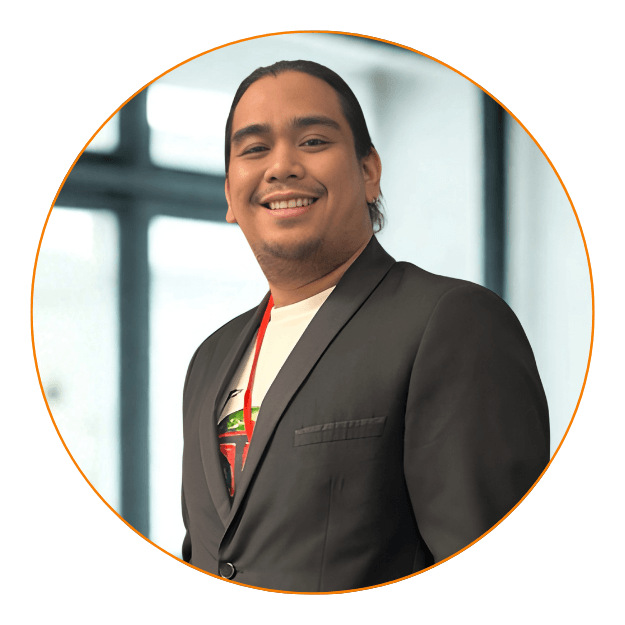
MARKETING DIRECTOR
Coordinates multi-property and group portfolio engagements. Owns the integration layer — measurement consolidation, group-level reporting, and the strategic relationship for hotel groups operating across multiple properties.
The LOKAL position
Most hotel AI SEO work is run by generalist agencies that don’t understand hospitality, or by hospitality marketers who don’t understand the technical AI layer. The combination — operator-grade hospitality knowledge plus OCN-level AI search expertise — is rare. LOKAL was built around exactly this combination because both halves are required to actually move direct-booking share.
Hospitality is the category where AI visibility compounds fastest. Travellers research extensively before booking. AI engines are now the front of that research. The hotels that show up in AI answers for destination and category queries this year will own those answers for years. The window for first-mover advantage closes as more properties join the citation set. The work that earns the citation today is the work that compounds tomorrow.
Why LOKAL vs. the alternatives
| Dimension | What most hotels do today | LOKAL hotel AI practice |
|---|---|---|
| Discipline coverage | Hotel SEO from one vendor. AI visibility absent or pilot-stage. | SEO + AEO + GEO under one practice. AI citation as a primary KPI. |
| Hospitality depth | Generalist marketing agency, occasional hotel client. | Hospitality-operator-led practice with OTA, direct-booking, and group portfolio depth. |
| Technical AI engineering | Robots.txt allows Googlebot. JS-rendered booking pages. Schema as a checkbox. | Bingbot & OAI-bot audit. SSR on every booking page. Hotel schema as architecture. |
| OTA strategy | OTA managed separately. Direct-booking goal abandoned or unrealistic. | OTA dependency audit. AI-driven direct-booking growth modelled and tracked. |
| Multi-property coordination | Each property managed independently. No group-level visibility view. | One AI visibility strategy across the portfolio, group-level measurement, brand-level execution. |
| AI citation tracking | Google rankings and OTA reports. AI engines uncovered. | Citation share, share of AI voice, and brand-mention sentiment across 5+ engines, monthly. |
Why hotels choose LOKAL
A generalist agency knows AI search but not hotels. A hospitality marketing firm knows hotels but not AI search engineering. LOKAL pairs both inside one practice — hands-on hospitality-operator experience on one side, Joshua Pielago leading from the OpenAI Champions Network side on the other. That combination is the difference between a hotel marketing campaign that mentions AI and a hotel AI visibility programme that actually moves direct-booking share.
The programme runs inside Total Visibility, so AI search compounds with traditional hotel SEO, branded SERP, Google Business Profile, OTA-channel optimization, and earned travel media. One team, one report, one strategy. For independent properties and hotel groups operating across multiple destinations.
If your direct-booking percentage hasn’t moved in three years, this is the lever you haven’t pulled yet.
-1920w.png)
Common questions
The discipline of getting a hotel cited inside AI-generated answers — ChatGPT, Gemini, Perplexity, Claude, and Google AI Overviews — when travellers ask for hotel recommendations. Combines schema and entity engineering, AI-conductive content, technical AI search engineering (Bing indexation, server-side rendering), authority signals, and review-surface management.
When AI engines recommend the property by name in answer to a traveller’s query, the booking can land direct via the hotel website rather than via Booking.com or Agoda. Every direct booking recovers the 15–25% OTA commission. AI search is the largest direct-booking opportunity hospitality has had in twenty years.
Branded citations typically appear within weeks of foundational schema, entity, and content work. Category citations take longer because the AI has to rebuild category associations. Full category authority compounds over multiple quarters.
Hotel SEO targets Google rankings. Hotel AI SEO targets citation inside AI-generated answers — schema architecture, AI-conductive content, Bing indexation, server-side rendering, and AI-weighted authority placement. LOKAL runs both as one practice — SEO + AEO + GEO under one programme.
ChatGPT browsing is powered by Bing’s index. Most hotel SEO programmes only audit Google. We audit Bing coverage as a primary KPI — Bingbot access, sitemap submission, indexation tracking — alongside Google.
No. The goal is shifting the mix — increasing direct-booking share via AI-driven discovery, reducing the share that pays full OTA commission. We run both channels with one strategy, with AI visibility as the lever for direct-booking growth.
Yes — multi-property and hotel-group engagements are a primary engagement model. One AI visibility strategy across the portfolio, brand-level execution per property, consolidated group-level measurement.
Joshua Pielago (Founder & AI SEO Lead, OpenAI Champions Network member) runs the AI search and technical engineering layer. CJ Masungsong (Marketing Director) coordinates multi-property and group portfolio engagements.
Ready when you are
Tell us about the property or group. We will run an AI visibility audit — where you appear across ChatGPT, Gemini, Perplexity, Claude, and AI Overviews; Bing indexation health; server-side rendering coverage on booking pages; OTA dependency baseline; and the modelled direct-booking opportunity. Reply within 48 hours.
Or email hello@lkl.ai · +63 917 529 5464 · +61 2 9145 8605